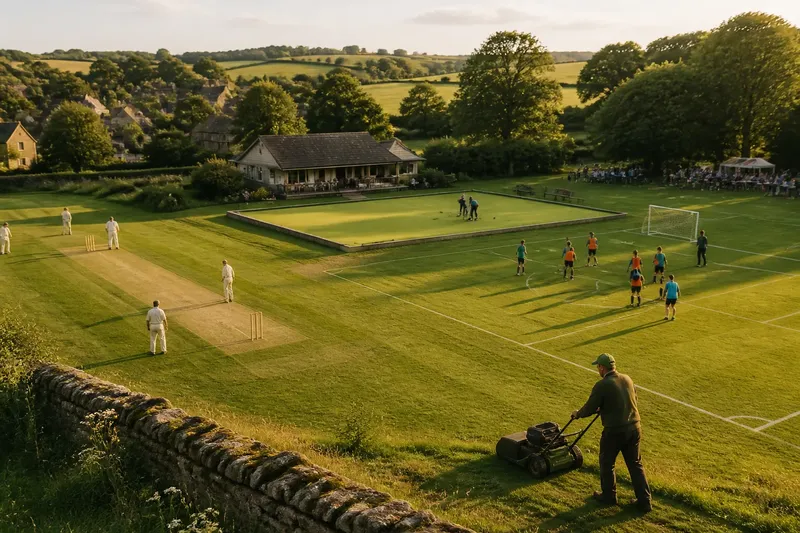
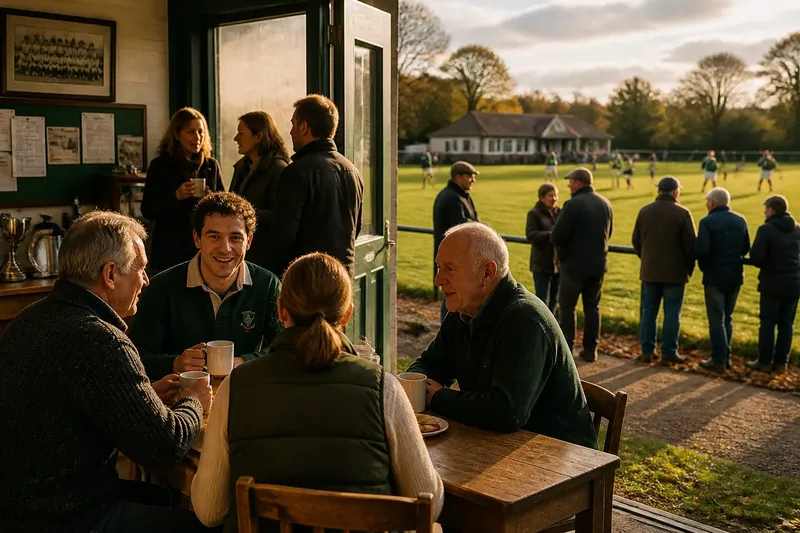
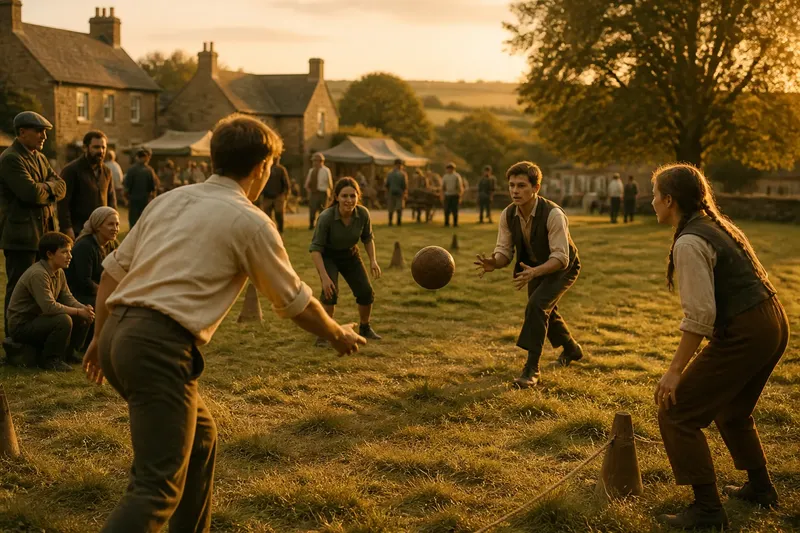
Why Village Grounds Often Have Uneven Boundaries
Why village grounds often have uneven boundaries: read fences, hedges, ditches, and slopes to tell the playing edge from the wider landscape.
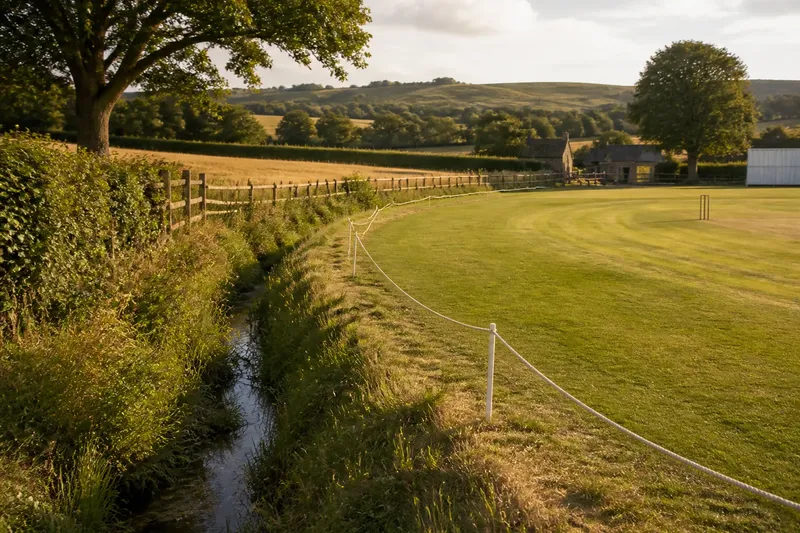
Why village grounds often have uneven boundaries is usually visible from the touchline: a fence bends around a hedge, a ditch marks one side, and the far corner meets a field without a clean line. These edges often follow the land and its earlier divisions, while the playing boundary is a separate, managed line laid out for sport.
Edges with a past
A village ground may occupy land that was never a single, level rectangle. Its edge can inherit a property boundary, a drainage channel, a track, or a strip that was simply awkward to plough. Later, the club fitted a pitch into that available space. The result may look irregular because it is irregular, not because someone mislaid the touchline.
Look at how a hedge behaves. A mature hedge that curves beyond the marked field may trace an older division; its roots and woody stems do not adjust themselves to a modern pitch layout. A newer mesh fence might follow the same curve because replacing the hedge with a straight run would cut across a ditch or a neighboring access route.
Neither feature, by itself, tells you exactly where one parcel ends or who owns it. It does show that the ground’s visible outline can preserve decisions made for purposes other than sport.
Reading the terrain
Slopes and wet ground often make the boundary easier to understand. A shallow hollow may collect runoff, so the playable area stops short of it. A bank can provide a natural edge on one side while the opposite side needs a fence. In such places, the apparent shape of the ground is partly a record of where people could sensibly place a pitch, path, or boundary marker.
Notice the surface as well as the skyline. A narrow band of rough grass outside a mown strip can be a buffer for drainage or maintenance, not spare playing space. A worn path along the edge may connect a gate to a road or nearby buildings. The route can explain why a boundary jogs inward at one point: people need to pass through, and the field has to accommodate them.
These clues are useful for understanding the place, but they do not settle the rules of a match. A hedge can sit beyond the playing boundary; a painted line can run inside a fence. The landform and the game’s marked area answer different questions.
Finding the playing edge
For a visitor, the reliable reference is the line set for the particular sport, not the broadest visible enclosure. Look for painted or chalked markings, corner flags, posts, or boundary markers. Their position may change with the game being played, and a shared ground can have more than one layout. A fence is a barrier; it is not automatically the line of play.
Where markings are faint, ask a club official or match steward where spectators should stand and which line applies. Keep clear of gates, access tracks, and any marked playing area. That is a more useful approach than inferring a ruling from a nearby hedge and a confident guess.
Imagine arriving for a village cricket match where the outfield narrows beside a drainage ditch. The boundary rope curves inward before the ditch, while an old fence continues beyond it. You can read the fence as part of the wider site and the rope as the match boundary; if the rope is unclear, the sensible next move is to ask an official rather than treating the ditch as a substitute marker.
What should you look for?
Does a hedge mark the playing boundary?
Not necessarily. A hedge may follow an older land division, while the sport’s active boundary is marked separately inside or outside it.
Why does one side have a ditch?
It may carry surface water or mark a change in the land. Its presence can help explain the ground’s shape, but it does not establish a match ruling.
Can a fence show the property line?
It may follow a property edge, an access route, or another practical limit. A fence alone is not enough to identify ownership or the precise legal boundary.
Which line counts during play?
Use the markings and instructions for the sport and fixture in front of you. If they are ambiguous, ask the responsible club official instead of relying on nearby landscape features.
Notice the transitions
The most revealing places are often the joins: where short grass meets rough ground, where a bank becomes a track, or where a fence turns to avoid a gate. These transitions show how the playing area sits within a larger working landscape. They can also help visitors choose a route that does not cross a ditch, disturb a hedge, or obstruct access.
When considering why village grounds often have uneven boundaries, keep the two outlines distinct. The landscape edge tells you something about terrain, access, and the ground’s accumulated use; the playing boundary tells you where the current game is set. Read both, and a crooked enclosure becomes less like a mistake and more like a practical map of the place.