The Myth of the Perfect Playing Field
The myth of the perfect playing field is that every patch should behave alike. Learn how clubs can choose improvements that fit their sport and community.
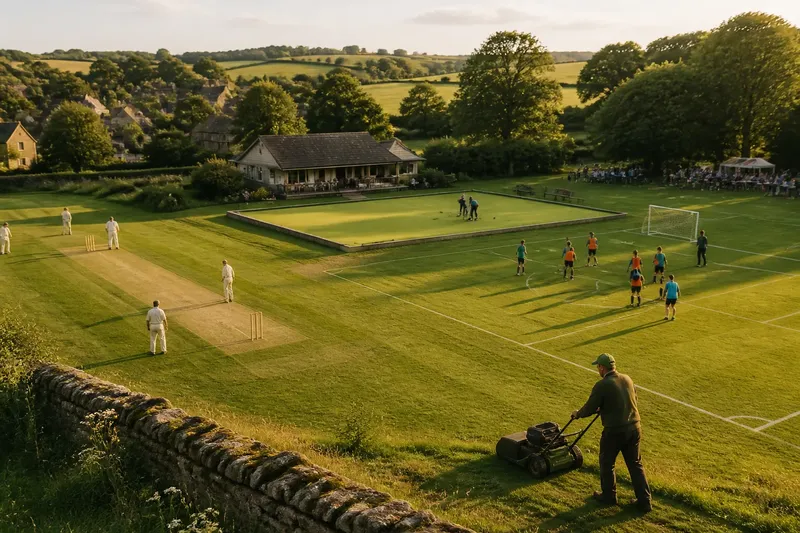
A village ground can be tidy and still be the wrong shape for the game played on it. The myth of the perfect playing field is that a single standard suits every club; in practice, a cricket square, a bowls green, and a football pitch ask different things of their caretakers and players.
Those differences matter most when a club decides what to spend time and effort maintaining. The issue is not whether a surface looks uniform, but whether its condition serves the sport, the club’s use of the ground, and the people who rely on it.
Standards by sport
Some sports depend on a carefully prepared area where consistent conditions support repeated, precise actions. Bowls, for example, relies on a purpose-made green and its own maintenance routine; a general-purpose field is not a substitute. Cricket also separates the prepared pitch from the larger outfield, with each area serving a different role.
Football grounds usually accommodate broader movement across a playing area, while village grounds may also host training, informal games, or community events. A single maintenance plan can miss those competing uses. The sensible starting point is to name the sport and the area in question, rather than borrowing a standard from a different kind of venue.
Who uses the ground
A club ground often belongs to more than the match-day team in practical terms. Junior sessions, visiting sides, grounds volunteers, and community groups may all use or care for some part of it. A change that helps one activity can complicate another, so a club needs to know whose needs are being considered before it settles on a plan.
That does not mean every preference carries equal weight in every decision. A match area may need to serve its sport first, while a shared edge or practice space can be managed for broader use. Clear priorities make compromises easier to explain than an unspoken assumption that the most visible use is the only one that counts.
Care and capacity
Maintenance is also a question of what a club can sustain. Volunteers may have limited time, and equipment, skills, and access to professional advice vary from place to place. A complicated routine is of little use if nobody can carry it out reliably.
Before adopting a new method or product, check the equipment instructions and any relevant local requirements. For specialized turf work, ask a qualified grounds professional rather than improvising from advice intended for another sport or site. General care can be discussed at club level; technical treatment deserves the right expertise.
Choose a workable plan
A useful decision begins with a defined area, a stated purpose, and a way to tell whether the plan is working. The following checks keep a proposal specific. For each observation, agree the corresponding decision rather than leaving the meeting with the traditional resolution to “keep an eye on it.”
- Name the activity. Observe which sport or event uses the area most directly; if its needs are clear, then set the maintenance priority around that use, or consult the other users before choosing a shared-use plan.
- Mark the location. Observe whether the concern is confined to a particular part of the ground; if it is, then limit the proposed work to that area, or gather more information before changing the whole site.
- Check the routine. Observe who currently performs each care task and whether the club has suitable tools; if the task is manageable, then assign it clearly, or simplify the plan and seek outside help for specialist work.
- Ask other users. Observe which groups rely on the same space; if their uses can coexist, then agree a shared schedule, or designate separate areas or times where the ground allows it.
- Define the intended result. Observe what players or caretakers would see during ordinary use if the change succeeds; if everyone can describe the same result, then review against it, or revise the proposal until its purpose is clear.
- Check technical advice. Observe whether the plan involves specialist products, machinery, or turf treatment; if it does, then follow the relevant instructions and consult a qualified grounds professional, or choose a simpler, non-specialist action.
Say a village club has a grass area used for football practice and a community gathering, and members propose changing its care routine. They first identify the football sessions as the use affected, then mark the part of the ground used for drills and ask the event organizer which space must remain available. If the proposed routine requires specialist treatment, they pause and ask a qualified grounds professional about the appropriate approach; if it does not, they assign the ordinary tasks to willing volunteers. The resulting decision is a limited plan for the drill area, with the rest kept available for community use, rather than a wholesale change based on a vague wish for a better-looking field.
Questions about grounds?
Does every sport need its own field?
No, but different sports can require different surfaces, layouts, and schedules. A club should identify where needs conflict and consider shared use only when the arrangements suit each activity.
Who should decide maintenance priorities?
The club should involve the people responsible for the ground and those whose activities depend on it. For technical turf decisions, a qualified grounds professional can help clarify what is appropriate for the site and sport.
Can one area serve matches and events?
Sometimes, if the timing and setup allow the uses to coexist. If an event would interfere with the playing area or its care, the club may need separate zones or a different schedule.
How should a club assess a new routine?
Set out the task, the person responsible, and the visible condition the club expects during normal use. If that condition is not appearing, review the method with appropriate expertise rather than adding more work by default.
A local standard
The myth of the perfect playing field is easier to resist when a club defines what “good” means for its own ground. Name the sport, the users, and the care the club can sustain; then judge the result against those needs instead of an abstract ideal.
At the next grounds meeting, bring one specific proposal and the reason for it. A clear decision about a defined area is easier to maintain—and easier to revise—than a broad promise to make the whole place perfect.