A Short-Day Visit to a Village Sports Ground
Plan a short-day village sports ground visit around winter light, safe paths, and a clear purpose, so you can enjoy the fixture without rushing.
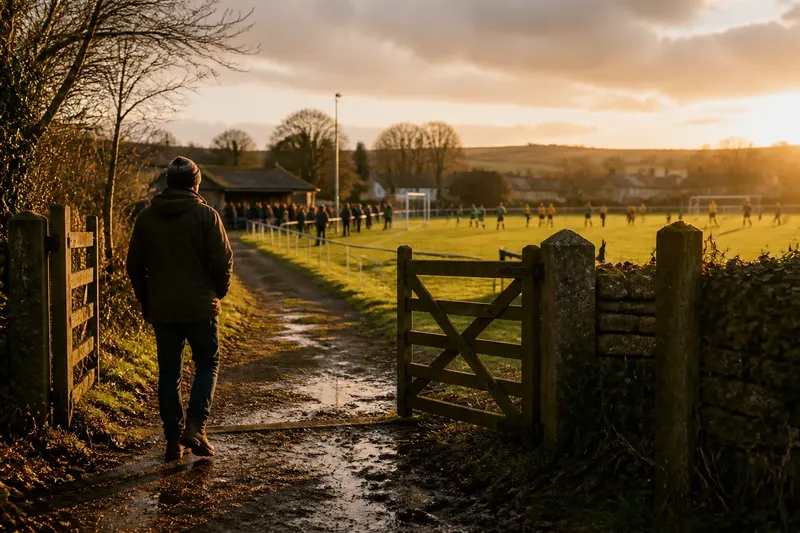
A short-day village sports ground visit works better when you plan around the walk in and the changing light, rather than trying to cover every corner. In winter, the approach lane, a damp gate, and the fading view across the field can shape the outing as much as the fixture itself.
Give the visit one main purpose: follow part of the match, notice how the ground sits in its landscape, or catch up with someone you know. A clear priority makes a short afternoon feel deliberate without turning it into a timetable.
Set A Simple Purpose
If the match is the priority, check the club’s fixture page before leaving and head directly to a place where you can see play without crossing the active area. If the setting interests you, allow time to notice the entrance, paths, and changing light before settling down. If you have only a brief window, choose one of those aims rather than attempting all of them at once.
Say you arrive after the game has started and have time for only a short stay. You check the club’s posted access directions, enter by the open gate, and watch from the first clear area that does not obstruct anyone. You leave during a pause, using the same marked path. The result is a brief visit shaped by the match and the route, without a hurried circuit or an awkward crossing.
Read Winter Conditions
Low winter light can change what is easy to see during a match. A stand, clubhouse, or line of trees may cast shade across part of the ground, while a pale sky behind the far boundary can make movement harder to distinguish. If following play becomes tiring, shift to a clearer position if one is available, or spend a spell observing the wider scene instead.
Pay attention to the approach as well as the playing area. A wet or muddy path may be less forgiving on the way out, particularly as the light fades. Wear shoes with grip and an outer layer suited to standing still; bring a small light if the club’s directions or the route home make one useful.
Make A Weather Decision
- Check the fixture notice: If the club reports a change of time, access, or cancellation, follow that update; otherwise, use the published arrival details.
- Check the entrance: If the usual gate is closed or marked out of use, take the entrance indicated by the club; otherwise, use the signed public route.
- Check the path underfoot: If it is muddy or slick, choose grippy footwear and walk carefully; if it is clear, ordinary comfortable shoes may be sufficient.
- Check the remaining light: If the route back is already difficult to see, leave by the marked path while it is still clear; otherwise, decide whether to stay through the next stretch of play.
- Check the wind and cold: If standing still feels uncomfortable, add a windproof layer or shorten the visit; if you are comfortable, keep your attention on the match rather than repeatedly checking the clock.
- Check photography notices: If signs or club rules restrict photography, put the camera away; otherwise, avoid close images of people, especially children, unless you have appropriate permission.
- Check the way out: If leaving would mean crossing the active area, wait for a pause or use the marked route; otherwise, leave without cutting across play.
Notice The Ground
A short circuit can show how the ground connects to the village, but it need not become a survey. Notice where the lane meets the entrance, whether the path runs beside buildings or open fields, and which parts of the playing area fall into shade first. Then pause in a permitted spot and watch a stretch of play.
Use pauses in the game to notice ordinary changes: players returning to position, spectators turning toward the entrance, or the last light slipping behind a tree line. Keep the observation discreet. People at a local fixture are there to play, watch, and get on with their afternoon, not to provide material for a field report.
What Should You Check?
Should you check the club page before leaving?
Yes. Look for fixture changes, access instructions, and any visitor arrangements, then follow the latest notice rather than relying on an old post or assumption.
What should you wear for a winter match?
Choose a warm outer layer, gloves, and footwear with grip if the approach may be wet or muddy. Clothes that tolerate a little dirt are generally more useful than anything chosen for a spotless journey home.
When should you leave a short-day fixture?
Leave when the marked route is still easy to see, or wait for a natural pause if you need to move near the playing area. If access is unclear, follow posted directions or ask a club representative.
Can you take photographs at a village ground?
Check signs and club rules first, and respect any restrictions. Avoid close photographs of identifiable people, especially children, unless you have appropriate permission.
End The Visit Well
Before heading back, check that you have your phone, gloves, and any flask, then take the route indicated by the club. A short-day village sports ground visit does not need to last the whole fixture to feel complete; leaving with a clear route and one remembered detail is a sound finish, and it saves the familiar winter search for a missing glove in the car park.